Scalp Vein Set - Scalp Vein Set Assembly Machine
Scalp Vein Set - Scalp Vein Set Assembly Machine
With the development of society, the structure and function of blood circulation in the human body have gradually become clear, and the methods and appliances for administering drugs through intravenous routes have also been continuously developed.
For most acute and severe patients and some patients who need special treatment, intravenous medication is often a fast and effective choice. In the impression of many patients or their family members, an intravenous infusion needle is a slender steel needle connected to an infusion tube. In fact, there are many types of intravenous needles available for clinical use.
At present, the clinically common and more commonly used ones are mainly the following: scalp vein set, venous indwelling needle, central venous catheter (CVC), peripherally inserted central catheter (PICC) ), infusion port (POR, implantable venous access port), etc.
The scope of application and main features of intravenous infusion needles.
1. Scalp vein set
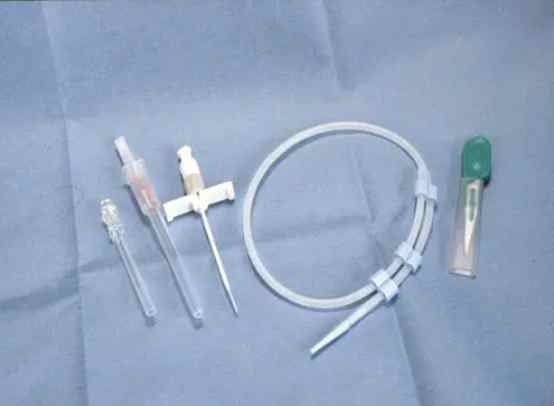
This is the most familiar and widely used intravenous infusion device for ordinary patients. Scope of application: ①Single treatment, intravenous infusion with short duration (usually <4h). ②It is often used for a single collection of venous blood samples.
Advantages: It can be removed after the treatment, without affecting daily life.
shortcoming:
①When used in patients with poor vascular conditions or unconsciousness and unable to cooperate well, the extravasation of the liquid medicine is prone to occur, which may lead to chemical phlebitis, and even cause serious complications such as local skin swelling, blisters, and necrosis disease.
②In the process of infusion therapy, patients are required to limit the movement of the needle limbs as much as possible, so that the comfort is significantly reduced.
2. Indwelling needle
Also known as intravenous trocar, it has been used more and more clinically in recent years, gradually showing the trend of breaking the “long-term monopoly of the top spot” with steel needles on the venous scalp.
Scope of application:
①In the case of a large amount of intravenous infusion and a long course of treatment (several hours to several days).
②It is especially suitable for the elderly, children and restless patients.
③Infusion of biological and blood products is required.
advantage:
①The operation process is simple, because the needle tube can be indwelled in the patient's vein during the treatment interval, which avoids the damage caused by repeated puncture of the blood vessel in a short time.
② It can effectively reduce the risk of drug extravasation.
③The patient's comfort level is higher, which increases the willingness to cooperate with treatment.
shortcoming:
① Although the indwelling time is longer than that of scalp steel needles, it should generally not exceed 3 days (72h).
②A small number of patients with poor vascular conditions will have phlebitis.
Precautions:
①The intravenous indwelling needle should not be routinely used for blood collection (except for short-term applications). ②Avoid binding the blood pressure monitor cuff and tourniquet at the proximal end of the limb where the indwelling needle is placed.
②It is not recommended for the continuous infusion of the following liquid medicines: parenteral nutrition (fatty milk, amino acids, etc.), with a pH lower than 5 or higher than 9.
3. Central venous catheter (CVC)
In CVC, catheters are inserted into the upper and inferior vena cava with larger diameters mainly through the internal jugular, subclavian, and femoral veins and kept for a certain period of time.
Scope of application:
①A large amount of liquid is required to be refilled quickly.
②The course of infusion therapy is 2 to 4 weeks.
③It is necessary to infuse liquids with vascular irritation, especially liquids with large molecular weight, hypertonic or viscous, such as fat emulsion, amino acids, mannitol, etc., and liquids with pH<5 or >9.
④When peripheral vein puncture is difficult.
⑤ Access to vascular interventional therapy.
Advantages: Compared with intravenous indwelling needles and scalp steel needles, the time that CVC can be indwelled in the vein is greatly increased, and the patient's vein irritation is relatively small.
Disadvantages: CVC has higher requirements for the operator, and there is a risk of complications such as pneumothorax (intubation in the subclavian vein), catheter infection, and venous thrombosis (intubation in the femoral vein).
Precautions:
①In order to effectively prevent infection, change the patch 1-2 times a week, and take care of the skin at the puncture site. If there is redness, swelling, or exudation, deal with it in time.
②The CVC catheter must be removed before the patient is discharged from the hospital, and the catheter cannot be taken out of the hospital.
评论
发表评论